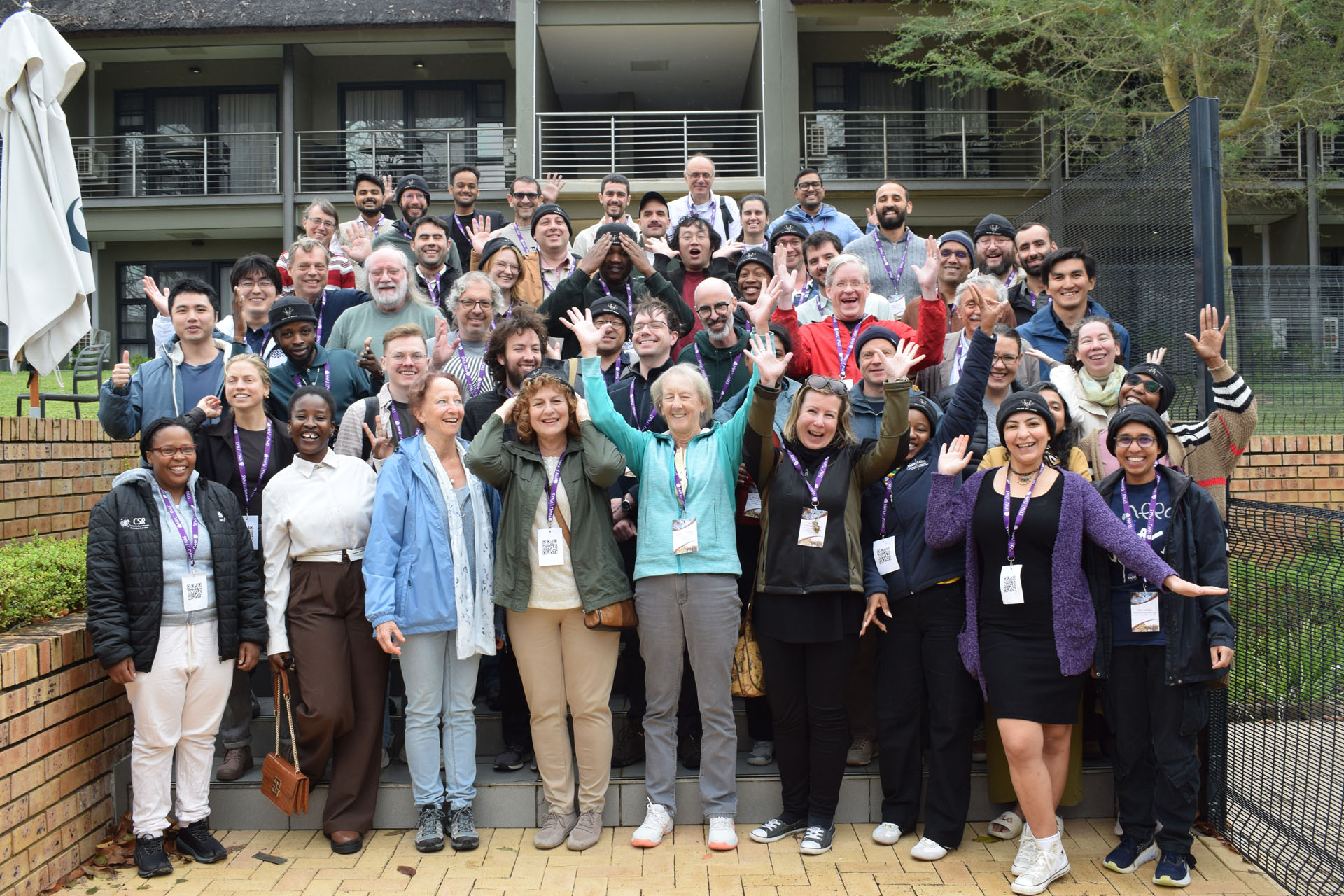
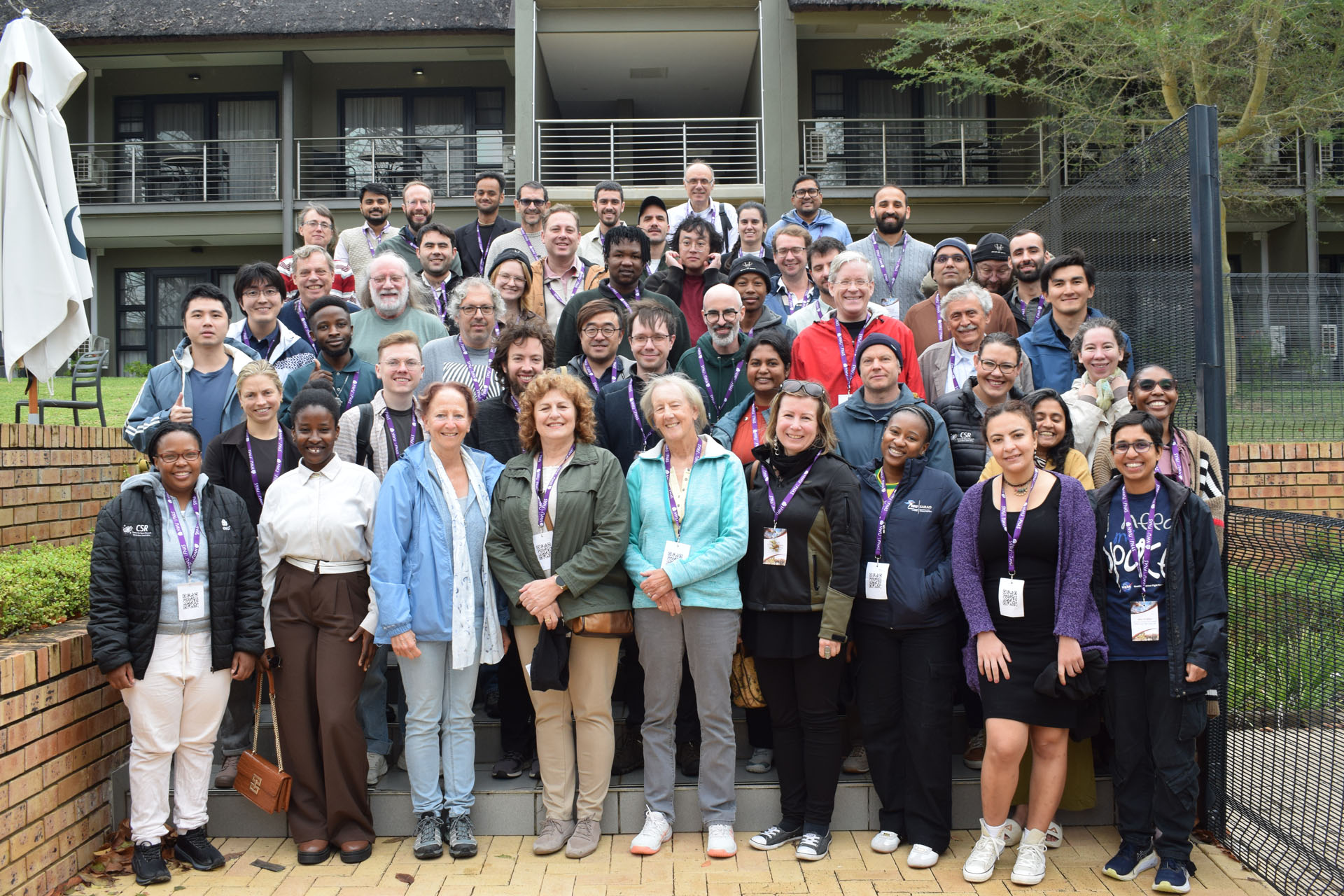
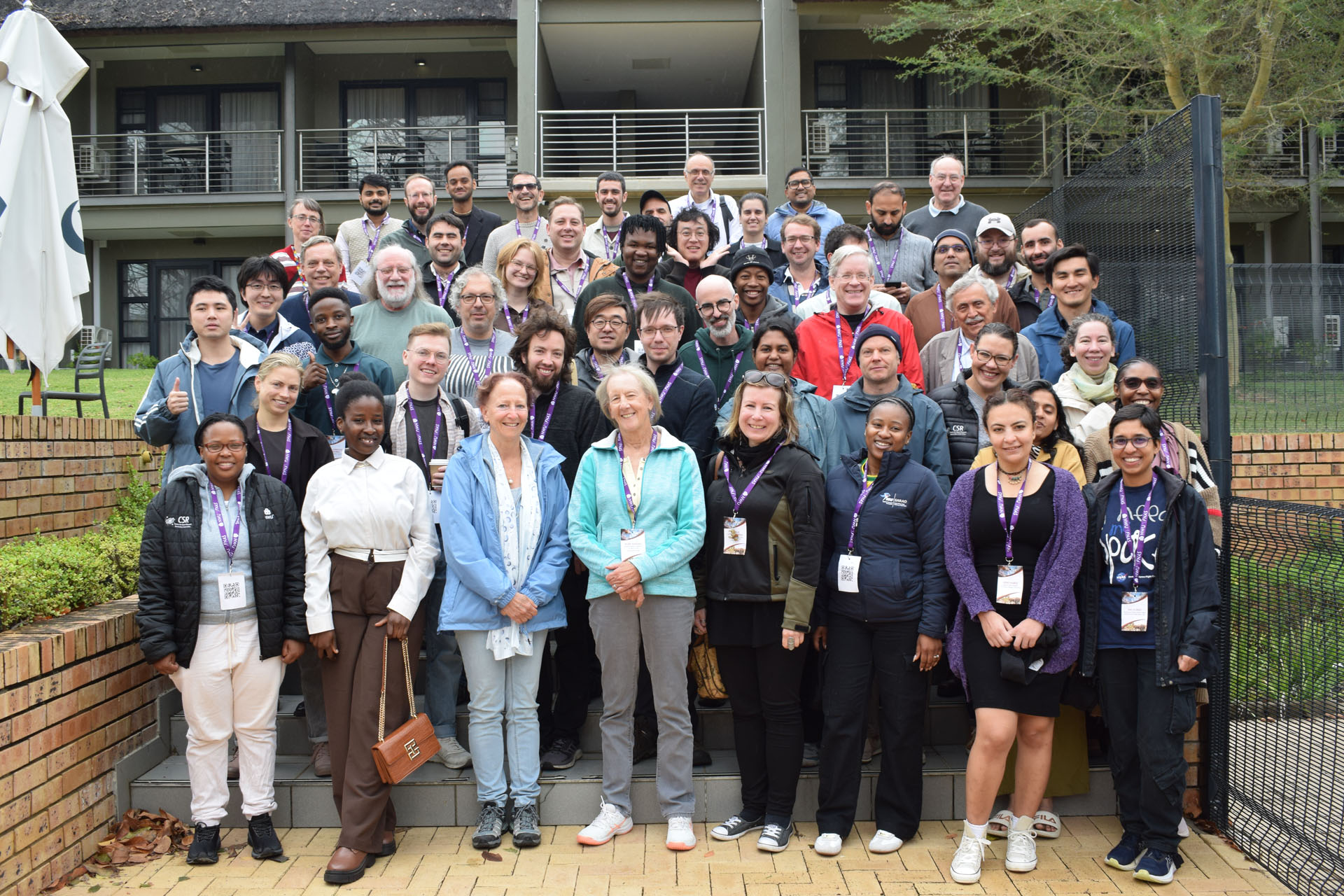
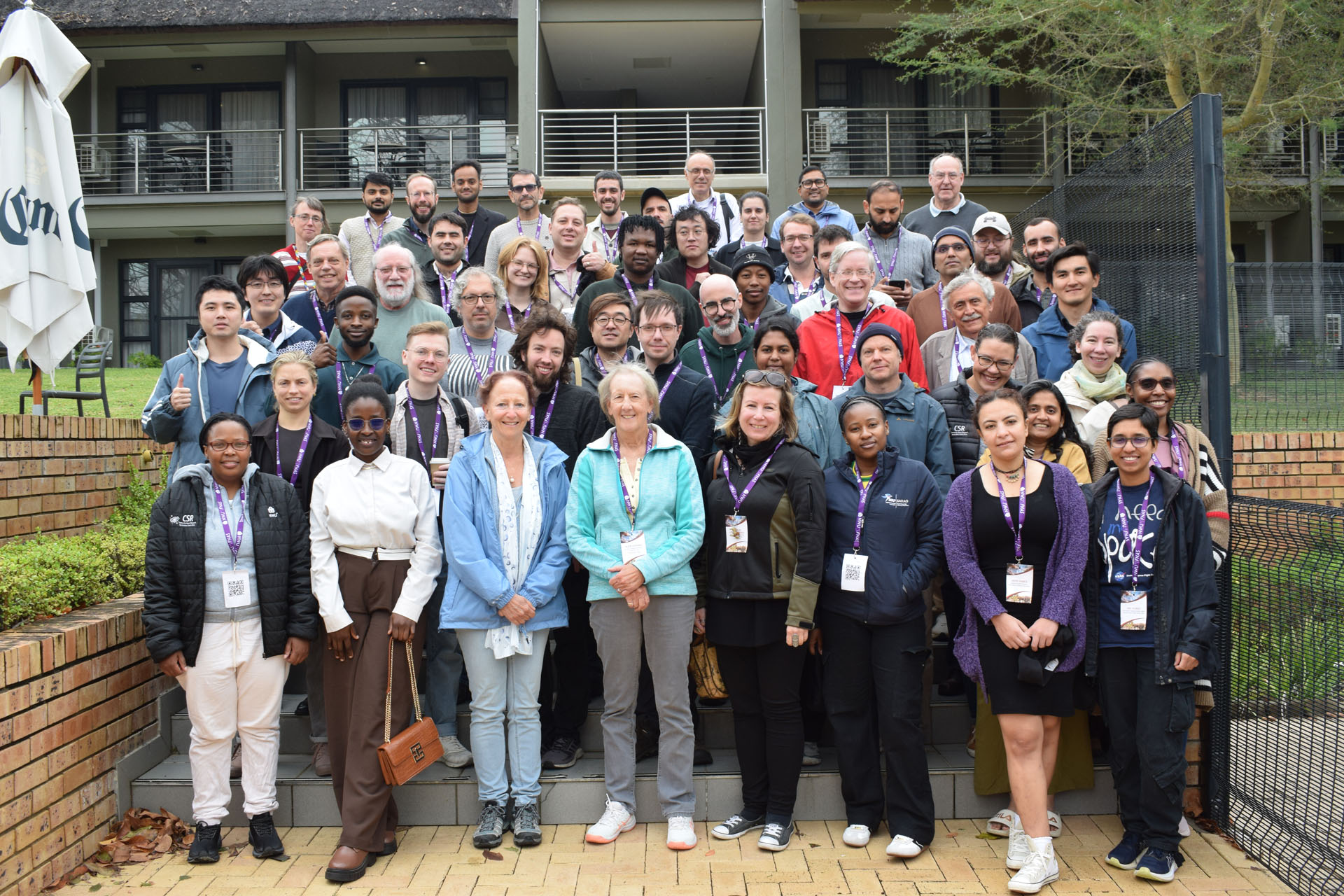
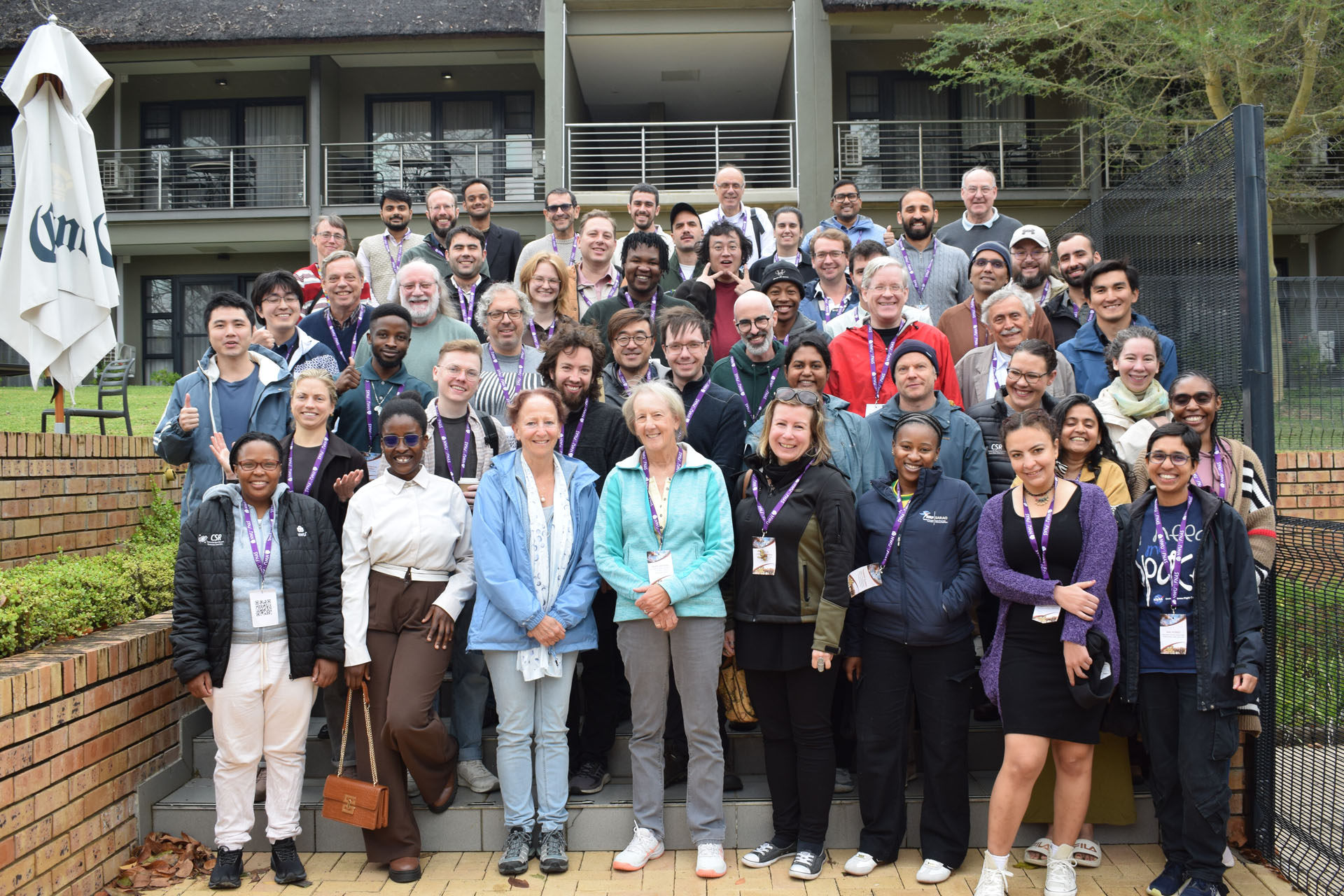
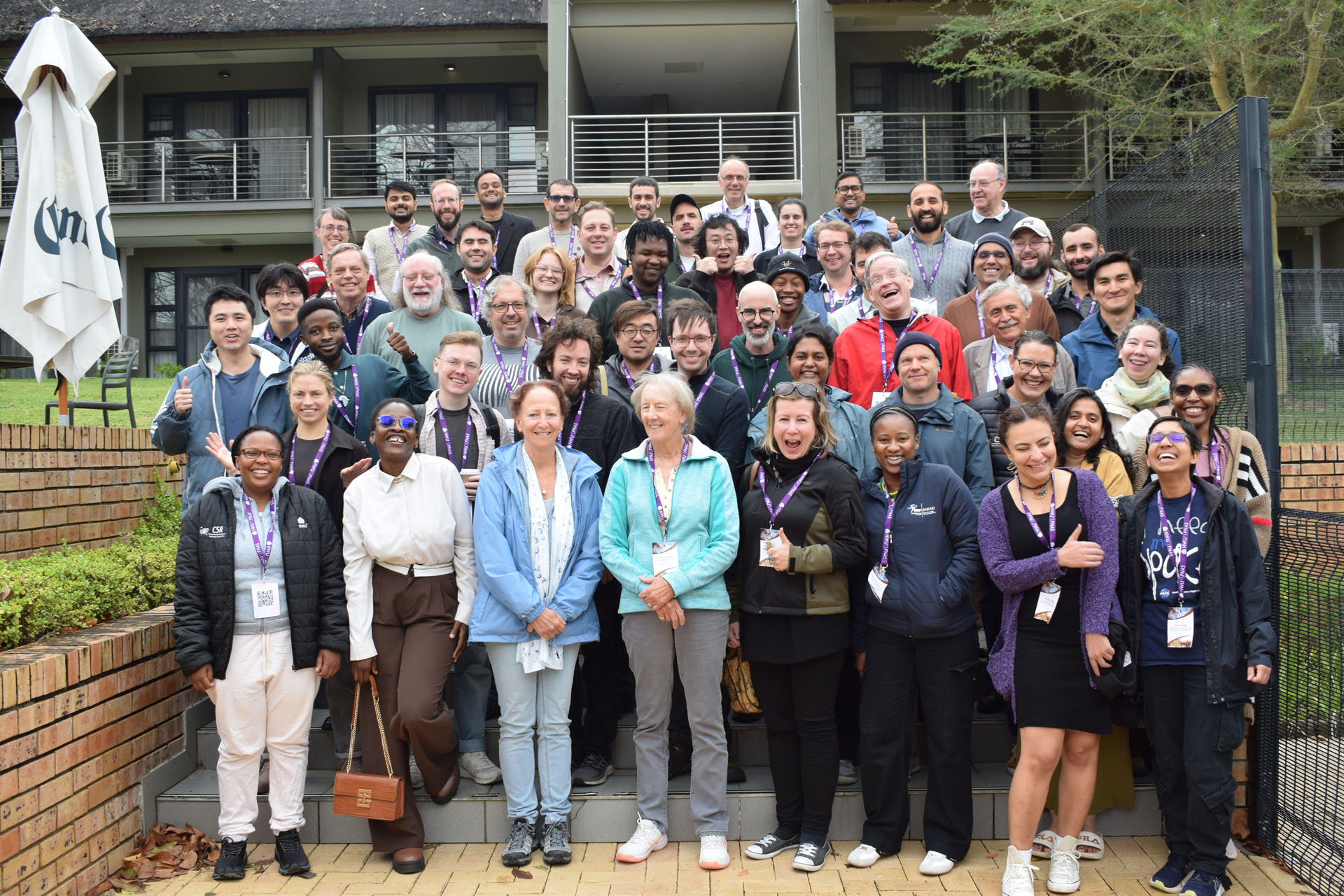
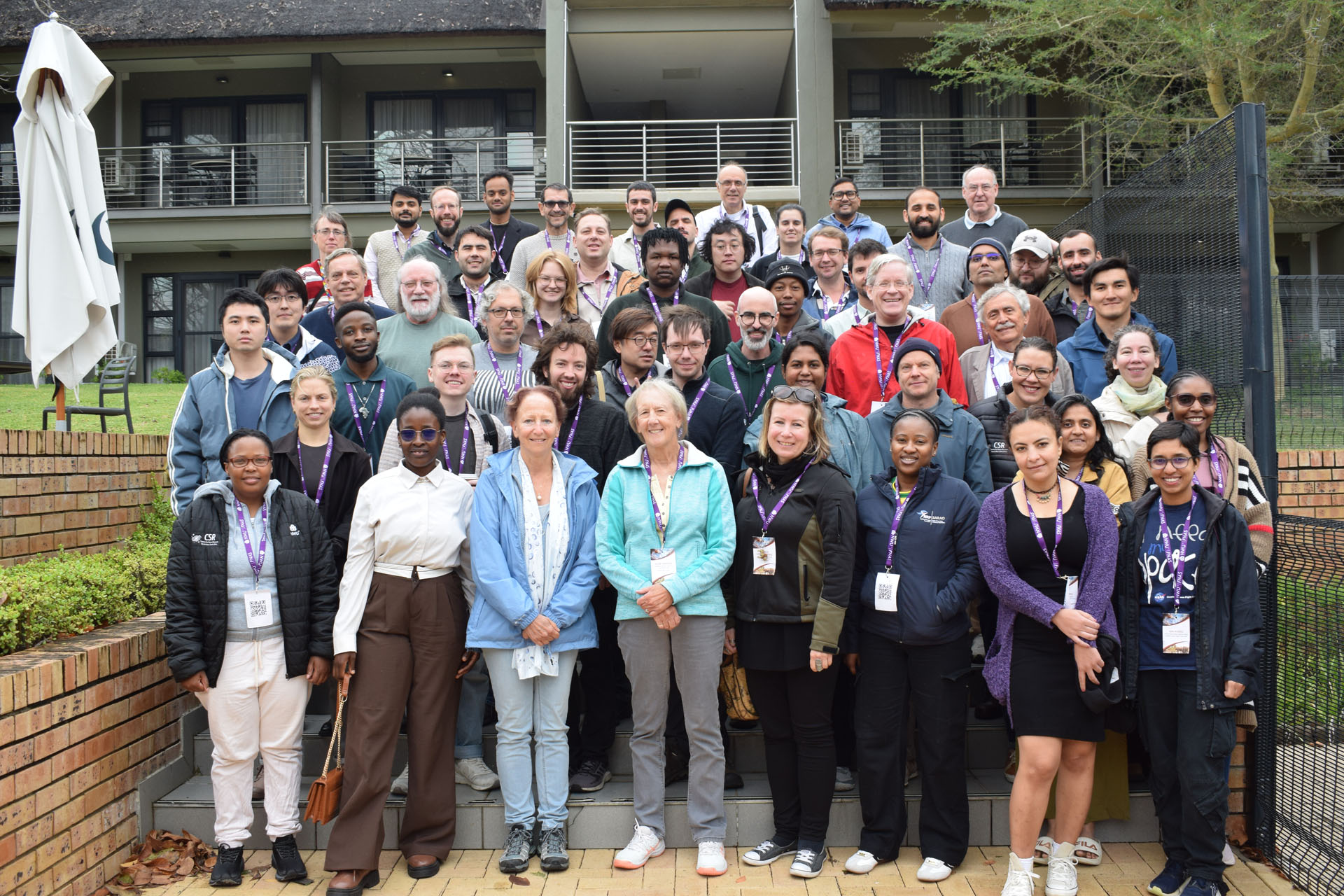
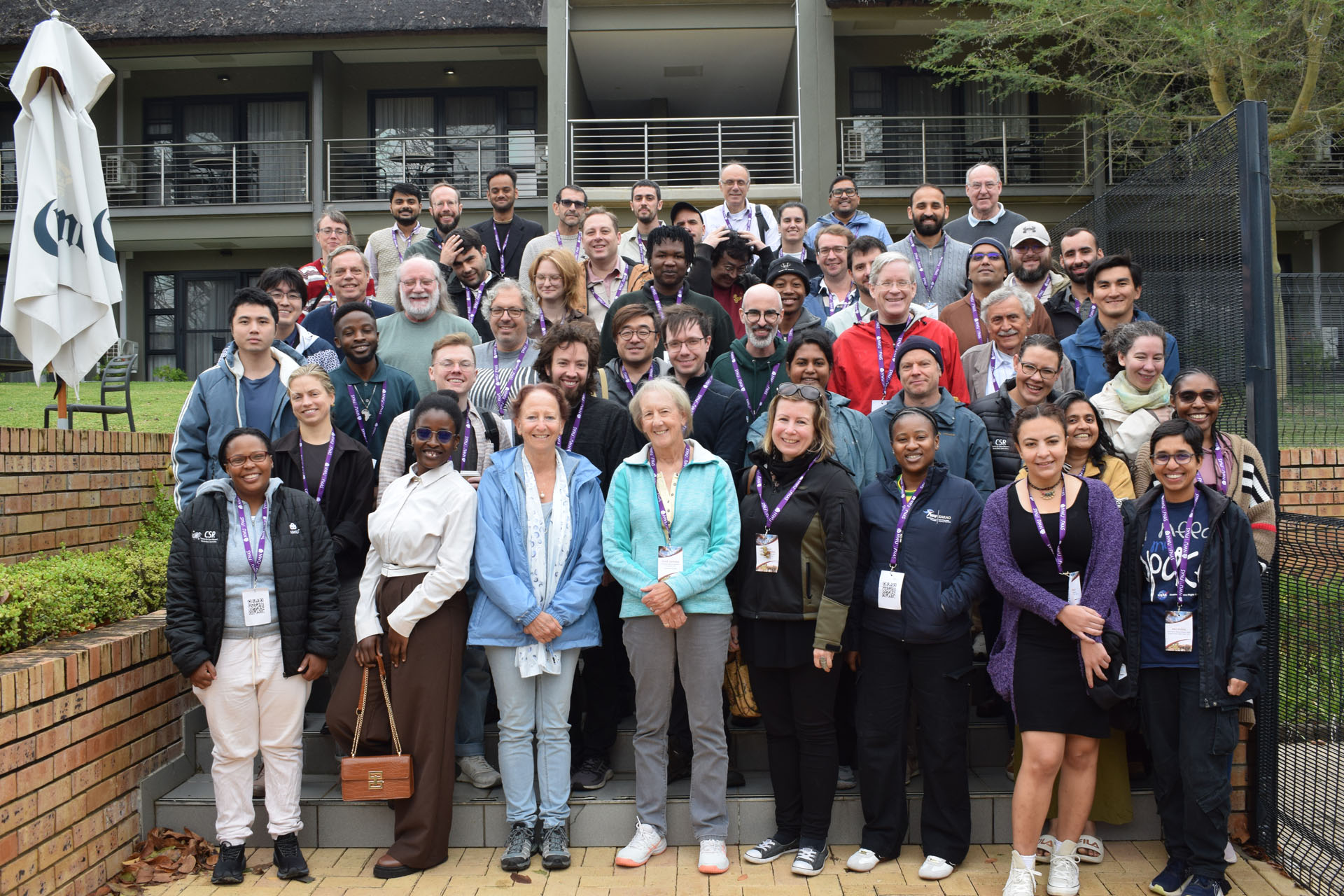






Enjoying Kruger? We’d love to see your favourite wildlife sightings and conference moments. Browse more photos here, or scan the QR code below to upload your own photos and videos.
Duration: Invited talks (25+5 mins); Solicited talks (15 + 5 mins); Contributed talks (12 + 3 mins).
SSID: Conference Guest
Password: knp@2026
Internet access will be available within the conference facilities.
A dedicated Wi-Fi network will be provided for conference use in the main meeting venues to support presentations and general academic activities (but probably not suitable for large data uploads or downloads).
Wi-Fi availability outside the conference venues may vary, and mobile data is recommended as a supplementary option for personal use. The Wifi networks and passwords will be available upon arrival at Skukuza.
Mobile data for personal use:
For personal communication and practical use such as WhatsApp, email, light internet browsing, and navigation to and within the park, delegates may find mobile data to be a convenient supplementary option during their stay.
Vodacom and MTN provide 3G/4G coverage in the Skukuza area, with generally good signal strength within the rest camp.
International delegates may purchase a local SIM card at OR Tambo International Airport upon arrival, or use an international eSIM service (such as Airalo, Nomad, or Holafly). Mobile data should be considered a supplementary option for personal communication and not a replacement for the dedicated internet provided within conference venues.
Offline maps are recommended when travelling within the park.
To view the gallery or share your photos and videos scan the QR Code below or click here.
Given responses by delegates, we have decided to provide ad hoc shuttle services free of charge using our LOC vehicles on Sunday 9 August. This will be between Skukuza Airport and the Skukuza Rest Camp only – any other arrival points should be serviced by their own shuttles. To assist in our planning, we ask that you please capture your itinerary information here, if you have not done so already.
Additionally, please be patient as we shuttle groups of passengers to Skukuza Lodge or the bungalows.
Flights from Johannesburg arrive at 11:05 and 14:05 and from Cape Town at 12:55 daily.
Since the LOC is returning to Potchefstroom on Saturday 15 August, delegates will need to book their own return shuttle (which may be shared to save costs) at the SANPARKS registration desk or at the Skukuza Lodge concierge.
Flights depart from Skukuza to Johannesburg at 13:35 and 14:35 and to Cape Town at 11:45.
Breakfast / Dinner
The Welcoming Function is supported by the Department of Science, Technology, and Innovation (DSTI). This will include a light dinner with vegetarian options and drinks.
It takes place on Sunday, August 9, 2026 at 18:00 at the Conference Centre.
We will have sundowners (cocktails) on Wednesday, August 12, 2026 at 16:30 and then drive to a boma in the Park where the Bush Braai will take place. Vegetarian options will be available.
Game drives may be booked at the SANPARKS Reception or via the Skukuza Lodge Concierge.
These are separate from and additional to the Daily Conservation Fees. There are three daily drives (around 05:30 / 16:30 / 20:00 SAST; final times will be confirmed in the Park). The duration is around 3 hours, and for the night drive it is 2 hours.
Online reservations may also be done here: https://www.sanparks.org/parks/kruger/what-to-do/activities/game-drives
Essential Travel Documents
Clothing
Health & Safety
Electronics
Money
For Safari Activities
Useful Information
Helpful Tips
Presenters are asked to take personal responsibility for delivering their talks / posters in keeping with the overall need for timeliness. Among other things, this will ensure the maximum possible time for each presenter to discuss their work with conference participants attending their session.
If you require any assistance before or during your presentation, please contact Christo Venter or speak to one of the Local Organising Committee (LOC) members on site. We will be happy to assist you.
Kruger National Park is located in a malaria-risk area, although the risk is generally low and seasonal.
Delegates are advised to consult a healthcare professional or travel clinic well in advance of travel to determine whether malaria prophylaxis is recommended based on individual circumstances. Use of mosquito repellant spray is also advisable. The Kruger Park had above-average rainfall and wide-spread flooding this summer, increasing the number of mosquitos in the Park.
As an additional precaution, the use of mosquito repellent and wearing long sleeves and trousers during the early morning and evening hours is advised.
All visitors to Kruger National Park are required to pay a daily conservation fee. The fee is charged per person, per day, regardless of the number of times you enter or exit the park during your stay. Fees vary depending on nationality (International, SADC, or South African resident).
For international visitors, the current daily conservation fee is R602 per person per day (subject to change). The SANParks Wild Card (International – All Parks Cluster, Individual) currently costs R4 680, which covers unlimited access to all participating SANParks national parks and is valid for 12 months from date of purchase.
Delegates planning to stay eight days or longer may wish to consider purchasing a SANParks Wild Card, which may be more cost-effective for extended stays.
However, for most international travellers the daily conservation fee is less expensive.
For information on SANParks Conservation Fees and Wild Card categories (including options for couples and families), please refer to the SANParks Website.
From 1 July 2026, every traveller entering or leaving South Africa by air, land, sea or rail must submit an online traveller declaration before they travel. This applies to South African citizens, residents and foreign travellers alike, including children and infants.
One would need a single declaration per traveller. A parent or guardian completes it on behalf of a child. The declaration must be submitted no more than 24 hours before departure from the country one is flying from. For journeys with stops, this means 24 hours before the final leg into South Africa.
A separate declaration is required when leaving South Africa. After submission, each traveller receives an emailed confirmation that should be saved or printed.
One may file the declaration here: tools.sars.gov.za/sarsonlinequery/traveller or by using the SATMS App (Apple, Google or Huawei stores). There may be scan-to-declare QR codes or self-service kiosks at certain ports.
The following information will be needed: passport details, travel details, contact details, and details of any travel companions. Ordinary personal effects do not need to be declared. Goods, currency or bearer negotiable instruments above the allowance do. The currency threshold is R100 000 in or out of South Africa without prior approval, and goods up to R5 000 per person are free of duty and VAT. Travellers will not be refused entry or departure simply because they have not declared in advance. Customs officers and self-service terminals are available at the ports to assist, and in limited cases a paper declaration may still be used. For full details, please visit www.sars.gov.za/travellerdeclaration
Assistance at Ports
Travellers who encounter issues or forget to declare in advance will not be denied entry or departure. Customs officers, QR codes, self-service kiosks, and paper backup forms are available at entry points to assist on arrival.
Use the following details where your address is asked:
Unit Number: N/A (or leave blank if optional, or enter bungalow/unit number if assigned, e.g. Bungalow C2)
Complex Name: Skukuza Rest Camp
Street: Kruger National Park
Suburb/District: Skukuza
City/Town: Skukuza or Mbombela
Postal Code: 1350
Getting local mobile data in South Africa is quick and easy for international visitors:
1. Option A: Buy an eSIM before you fly (Recommended)
Skip airport queues by purchasing a digital eSIM (e.g., via Airalo, Maya Mobile, or Vodacom/MTN eSIM) before traveling.
Once installed, simply turn on data roaming on your eSIM line as soon as you land.
2. Option B: Get a Physical SIM at OR Tambo Airport
Where: Official Vodacom and MTN stores are located in the International Arrivals Hall (Central Terminal Building) right after exiting customs and baggage collection.
RICA Registration (Required by Law): To register a local SIM card, you must bring your passport. The store assistant will scan your passport and activate the SIM card on the spot.
Payment: Credit cards, debit cards, and cash are accepted.
Useful Tip for Kruger Park Travel: Both Vodacom and MTN offer the most reliable coverage in rural areas and along the route to Skukuza / Kruger National Park.
While daytime temperatures in Kruger National Park are generally mild to warm during winter, early morning and evening temperatures can be surprisingly cold. Guided game drives typically depart before sunrise or return after sunset, and are conducted in open safari vehicles, where wind exposure can significantly increase the chill factor. During the winter months, early morning temperatures may drop to single digits (°C), particularly in June, July, and August.
Delegates are strongly advised to pack warm layers, including:
A warm jacket or fleece
A beanie or scarf
Gloves for early morning drives
These layers can easily be removed later in the day as temperatures rise.
To stay updated on hourly conditions during your stay, delegates are recommended to check local forecasts using reliable tools like Yr.no (the official Norwegian Meteorological Institute, known for pinpoint accuracy in Southern Africa) or AccuWeather Skukuza for real-time temperature updates and precipitation chances. For interactive radar and live satellite maps across Kruger National Park, Ventusky Skukuza provides excellent hourly visual coverage.
While daytime temperatures in Kruger National Park are generally mild to warm during winter, early morning and evening temperatures can be surprisingly cold. Guided game drives typically depart before sunrise or return after sunset, and are conducted in open safari vehicles, where wind exposure can significantly increase the chill factor. During the winter months, early morning temperatures may drop to single digits (°C), particularly in June, July, and August.
Delegates are strongly advised to pack warm layers, including:
A warm jacket or fleece
A beanie or scarf
Gloves for early morning drives
These layers can easily be removed later in the day as temperatures rise.
South Africa uses a 220–230 V / 50 Hz electricity supply. The standard wall socket is the three-pin South African plug (Type M).
Many hotels and conference venues, including facilities at Skukuza, provide multi-standard sockets that can accommodate European two-pin plugs. However, this cannot be guaranteed in all rooms or buildings.
Delegates are therefore advised to bring a universal travel adapter or a South Africa (Type M) plug adapter for their electronic devices. These can be obtained at OR Tambo Airport.
Tipping in South Africa is customary and deeply appreciated, as many service staff rely on tips to supplement their income. While tipping is discretionary, here is a general guide for standard practice:
1. Restaurants & Bars
Standard Tip: 10% to 15% of the total bill for good service.
Check Your Bill: For groups of 6 or more, restaurants often automatically add a 10%–15% service charge to the final bill. Always check before adding an extra tip.
Payment: Card tips can usually be added when paying by terminal, but cash tips (ZAR) are often preferred as they go directly to your server on the day.
2. Car Guards (Parking Attendants)
In open streets and shopping centres, you will often notice “Car Guards” wearing reflective high-visibility vests. They assist with parking and keep an eye on vehicles while you are away.
Standard Tip: R5 to R10 (in cash coins or small notes) when you return to your vehicle. If parked for an extended period, R15 to R20 is appreciated.
3. Fuel / Petrol Station Attendants
South African petrol stations are full service—attendants will pump fuel for you and often clean your windshield or offer to check oil and tyre pressures.
Standard Tip: R5 to R15 in cash (or added to your card payment if requested).
4. Airport Porters & Hotel Staff
Porters: R15 to R20 per bag for luggage assistance.
Hotel Housekeeping: R20 to R50 per day left in the room.
Suggestion: Keep a stash of small Rand cash notes (R10, R20, R50) or coins readily accessible in your pocket or bag for quick tipping without having to pull out large notes!
A Note on Airport Luggage & Porters
Official Porters Only: If you require luggage assistance, only use official airport porters wearing ACSA badges and orange branded uniforms/vests. Standard tipping is R20 per bag. Decline unsolicited offers from plain-clothed individuals.
Welcome to South Africa! You’ll often hear locals call our country “Mzansi” (derived from the isiXhosa word uMzantsi, meaning “South”).
To help you blend in like a local between conference sessions, here is your essential guide to greeting people, understanding local time warp physics, and speaking the lingo.
South Africa has 12 official languages, but you can get by anywhere with a warm smile and these classics:
“Howzit!” — The absolute universal South African greeting. It combines “How is it going?” and “Hello” into one easy word.
“Sawubona” (isiZulu/isiXhosa) — Means “I see you.” Reply with
“Yebo” (Yes / I see you too).
“Dumela” (Sotho/Tswana) — A respectful, warm greeting used widely across northern South Africa.
“Goeiemôre” (Afrikaans) — Good morning!
9 Provinces, 1 Giant Vibe: From the coastal waves of the Western Cape to the wild savanna of Mpumalanga, South Africa is split into 9 distinct provinces.
62+ Million Strong: We are home to roughly 62 million people – a melting pot of cultures, rhythms, and world-class hospitality.
12 Official Languages: Why settle for one or two? South Africa recognizes 12 official languages (including South African Sign Language) though you’ll find that English is the common tongue for business, conference sessions, and travel!
9 Biomes in 1 Country: Our landscapes shift fast – you can trek through lush subtropical forests, dramatic mountain ranges (like the Drakensberg), vast semidesert plains (the Karoo), and wildlife-packed bushveld all in a single trip.
The World’s Tiniest Floral Kingdom: We host the Cape Floral Kingdom – the smallest of the planet’s six floral kingdoms, but the only one contained entirely within a single country. It has more plant species per square kilometer than the Amazon rainforest!
Lekker (leh-ker) — Awesome, great, delicious, or good vibes. (e.g., “That coffee was lekker!”)
Braai (bry) — A South African barbecue, but elevated to a cultural sacred event over open wood flames.
Robot — A traffic light. (e.g., “Turn left at the next robot.”)
Bakkie (bak-ee) — A pickup truck/utility vehicle. You’ll see plenty of these in the safari parks!
Sharp (or “Sharp-sharp”) — Means “Goodbye,” “Sounds good,” “I’m fine,” or “Thank you”—usually accompanied by a thumbs-up.
Eish! (ay-sh) — An exclamation of surprise, empathy, annoyance, or awe. (e.g., “Eish, that safari drive was early!”)
Boet / Bru — Brother, mate, or pal.
Aweh! (ah-weh) — A multi-purpose slang word that means “Yes!”, “I agree!”, “Cool!”, or even “Hello!” Example: “Are we heading out for the evening game drive?” “Aweh, let’s go!”
As physicists and astrophysicists, you understand relativity – but South African time is a force of its own:
| Word | What it literally means | What it actually means |
| “Now” | Right this second. | Immediately (maybe). |
| “Now-now” | Very soon. | In 5 to 15 minutes. |
| “Just now” | Sometime in the near future. | Anything from 30 minutes to later today… or never. |
The Thumbs-Up or Wave: When driving on rural roads or inside Kruger, a quick hand raise or thumbs-up to passing drivers is standard courtesy, especially when accompanied by a smile.
Essential Travel Documents
Clothing
Health & Safety
Electronics
Money
For Safari Activities
Useful Information
Helpful Tips
Presenters are asked to take personal responsibility for delivering their talks / posters in keeping with the overall need for timeliness. Among other things, this will ensure the maximum possible time for each presenter to discuss their work with conference participants attending their session.
If you require any assistance before or during your presentation, please contact Christo Venter or speak to one of the Local Organising Committee (LOC) members on site. We will be happy to assist you.
Kruger National Park is located in a malaria-risk area, although the risk is generally low and seasonal.
Delegates are advised to consult a healthcare professional or travel clinic well in advance of travel to determine whether malaria prophylaxis is recommended based on individual circumstances. Use of mosquito repellant spray is also advisable. The Kruger Park had above-average rainfall and wide-spread flooding this summer, increasing the number of mosquitos in the Park.
As an additional precaution, the use of mosquito repellent and wearing long sleeves and trousers during the early morning and evening hours is advised.
All visitors to Kruger National Park are required to pay a daily conservation fee. The fee is charged per person, per day, regardless of the number of times you enter or exit the park during your stay. Fees vary depending on nationality (International, SADC, or South African resident).
For international visitors, the current daily conservation fee is R602 per person per day (subject to change). The SANParks Wild Card (International – All Parks Cluster, Individual) currently costs R4 680, which covers unlimited access to all participating SANParks national parks and is valid for 12 months from date of purchase.
Delegates planning to stay eight days or longer may wish to consider purchasing a SANParks Wild Card, which may be more cost-effective for extended stays.
However, for most international travellers the daily conservation fee is less expensive.
For information on SANParks Conservation Fees and Wild Card categories (including options for couples and families), please refer to the SANParks Website.
From 1 July 2026, every traveller entering or leaving South Africa by air, land, sea or rail must submit an online traveller declaration before they travel. This applies to South African citizens, residents and foreign travellers alike, including children and infants.
One would need a single declaration per traveller. A parent or guardian completes it on behalf of a child. The declaration must be submitted no more than 24 hours before departure from the country one is flying from. For journeys with stops, this means 24 hours before the final leg into South Africa.
A separate declaration is required when leaving South Africa. After submission, each traveller receives an emailed confirmation that should be saved or printed.
One may file the declaration here: tools.sars.gov.za/sarsonlinequery/traveller or by using the SATMS App (Apple, Google or Huawei stores). There may be scan-to-declare QR codes or self-service kiosks at certain ports.
The following information will be needed: passport details, travel details, contact details, and details of any travel companions. Ordinary personal effects do not need to be declared. Goods, currency or bearer negotiable instruments above the allowance do. The currency threshold is R100 000 in or out of South Africa without prior approval, and goods up to R5 000 per person are free of duty and VAT. Travellers will not be refused entry or departure simply because they have not declared in advance. Customs officers and self-service terminals are available at the ports to assist, and in limited cases a paper declaration may still be used. For full details, please visit www.sars.gov.za/travellerdeclaration
Assistance at Ports
Travellers who encounter issues or forget to declare in advance will not be denied entry or departure. Customs officers, QR codes, self-service kiosks, and paper backup forms are available at entry points to assist on arrival.
Use the following details where your address is asked:
Unit Number: N/A (or leave blank if optional, or enter bungalow/unit number if assigned, e.g. Bungalow C2)
Complex Name: Skukuza Rest Camp
Street: Kruger National Park
Suburb/District: Skukuza
City/Town: Skukuza or Mbombela
Postal Code: 1350
Getting local mobile data in South Africa is quick and easy for international visitors:
1. Option A: Buy an eSIM before you fly (Recommended)
Skip airport queues by purchasing a digital eSIM (e.g., via Airalo, Maya Mobile, or Vodacom/MTN eSIM) before traveling.
Once installed, simply turn on data roaming on your eSIM line as soon as you land.
2. Option B: Get a Physical SIM at OR Tambo Airport
Where: Official Vodacom and MTN stores are located in the International Arrivals Hall (Central Terminal Building) right after exiting customs and baggage collection.
RICA Registration (Required by Law): To register a local SIM card, you must bring your passport. The store assistant will scan your passport and activate the SIM card on the spot.
Payment: Credit cards, debit cards, and cash are accepted.
Useful Tip for Kruger Park Travel: Both Vodacom and MTN offer the most reliable coverage in rural areas and along the route to Skukuza / Kruger National Park.
While daytime temperatures in Kruger National Park are generally mild to warm during winter, early morning and evening temperatures can be surprisingly cold. Guided game drives typically depart before sunrise or return after sunset, and are conducted in open safari vehicles, where wind exposure can significantly increase the chill factor. During the winter months, early morning temperatures may drop to single digits (°C), particularly in June, July, and August.
Delegates are strongly advised to pack warm layers, including:
A warm jacket or fleece
A beanie or scarf
Gloves for early morning drives
These layers can easily be removed later in the day as temperatures rise.
To stay updated on hourly conditions during your stay, delegates are recommended to check local forecasts using reliable tools like Yr.no (the official Norwegian Meteorological Institute, known for pinpoint accuracy in Southern Africa) or AccuWeather Skukuza for real-time temperature updates and precipitation chances. For interactive radar and live satellite maps across Kruger National Park, Ventusky Skukuza provides excellent hourly visual coverage.
While daytime temperatures in Kruger National Park are generally mild to warm during winter, early morning and evening temperatures can be surprisingly cold. Guided game drives typically depart before sunrise or return after sunset, and are conducted in open safari vehicles, where wind exposure can significantly increase the chill factor. During the winter months, early morning temperatures may drop to single digits (°C), particularly in June, July, and August.
Delegates are strongly advised to pack warm layers, including:
A warm jacket or fleece
A beanie or scarf
Gloves for early morning drives
These layers can easily be removed later in the day as temperatures rise.
South Africa uses a 220–230 V / 50 Hz electricity supply. The standard wall socket is the three-pin South African plug (Type M).
Many hotels and conference venues, including facilities at Skukuza, provide multi-standard sockets that can accommodate European two-pin plugs. However, this cannot be guaranteed in all rooms or buildings.
Delegates are therefore advised to bring a universal travel adapter or a South Africa (Type M) plug adapter for their electronic devices. These can be obtained at OR Tambo Airport.
Tipping in South Africa is customary and deeply appreciated, as many service staff rely on tips to supplement their income. While tipping is discretionary, here is a general guide for standard practice:
1. Restaurants & Bars
Standard Tip: 10% to 15% of the total bill for good service.
Check Your Bill: For groups of 6 or more, restaurants often automatically add a 10%–15% service charge to the final bill. Always check before adding an extra tip.
Payment: Card tips can usually be added when paying by terminal, but cash tips (ZAR) are often preferred as they go directly to your server on the day.
2. Car Guards (Parking Attendants)
In open streets and shopping centres, you will often notice “Car Guards” wearing reflective high-visibility vests. They assist with parking and keep an eye on vehicles while you are away.
Standard Tip: R5 to R10 (in cash coins or small notes) when you return to your vehicle. If parked for an extended period, R15 to R20 is appreciated.
3. Fuel / Petrol Station Attendants
South African petrol stations are full service—attendants will pump fuel for you and often clean your windshield or offer to check oil and tyre pressures.
Standard Tip: R5 to R15 in cash (or added to your card payment if requested).
4. Airport Porters & Hotel Staff
Porters: R15 to R20 per bag for luggage assistance.
Hotel Housekeeping: R20 to R50 per day left in the room.
Suggestion: Keep a stash of small Rand cash notes (R10, R20, R50) or coins readily accessible in your pocket or bag for quick tipping without having to pull out large notes!
A Note on Airport Luggage & Porters
Official Porters Only: If you require luggage assistance, only use official airport porters wearing ACSA badges and orange branded uniforms/vests. Standard tipping is R20 per bag. Decline unsolicited offers from plain-clothed individuals.
Welcome to South Africa! You’ll often hear locals call our country “Mzansi” (derived from the isiXhosa word uMzantsi, meaning “South”).
To help you blend in like a local between conference sessions, here is your essential guide to greeting people, understanding local time warp physics, and speaking the lingo.
South Africa has 12 official languages, but you can get by anywhere with a warm smile and these classics:
“Howzit!” — The absolute universal South African greeting. It combines “How is it going?” and “Hello” into one easy word.
“Sawubona” (isiZulu/isiXhosa) — Means “I see you.” Reply with
“Yebo” (Yes / I see you too).
“Dumela” (Sotho/Tswana) — A respectful, warm greeting used widely across northern South Africa.
“Goeiemôre” (Afrikaans) — Good morning!
9 Provinces, 1 Giant Vibe: From the coastal waves of the Western Cape to the wild savanna of Mpumalanga, South Africa is split into 9 distinct provinces.
62+ Million Strong: We are home to roughly 62 million people – a melting pot of cultures, rhythms, and world-class hospitality.
12 Official Languages: Why settle for one or two? South Africa recognizes 12 official languages (including South African Sign Language) though you’ll find that English is the common tongue for business, conference sessions, and travel!
9 Biomes in 1 Country: Our landscapes shift fast – you can trek through lush subtropical forests, dramatic mountain ranges (like the Drakensberg), vast semidesert plains (the Karoo), and wildlife-packed bushveld all in a single trip.
The World’s Tiniest Floral Kingdom: We host the Cape Floral Kingdom – the smallest of the planet’s six floral kingdoms, but the only one contained entirely within a single country. It has more plant species per square kilometer than the Amazon rainforest!
Lekker (leh-ker) — Awesome, great, delicious, or good vibes. (e.g., “That coffee was lekker!”)
Braai (bry) — A South African barbecue, but elevated to a cultural sacred event over open wood flames.
Robot — A traffic light. (e.g., “Turn left at the next robot.”)
Bakkie (bak-ee) — A pickup truck/utility vehicle. You’ll see plenty of these in the safari parks!
Sharp (or “Sharp-sharp”) — Means “Goodbye,” “Sounds good,” “I’m fine,” or “Thank you”—usually accompanied by a thumbs-up.
Eish! (ay-sh) — An exclamation of surprise, empathy, annoyance, or awe. (e.g., “Eish, that safari drive was early!”)
Boet / Bru — Brother, mate, or pal.
Aweh! (ah-weh) — A multi-purpose slang word that means “Yes!”, “I agree!”, “Cool!”, or even “Hello!” Example: “Are we heading out for the evening game drive?” “Aweh, let’s go!”
As physicists and astrophysicists, you understand relativity – but South African time is a force of its own:
| Word | What it literally means | What it actually means |
| “Now” | Right this second. | Immediately (maybe). |
| “Now-now” | Very soon. | In 5 to 15 minutes. |
| “Just now” | Sometime in the near future. | Anything from 30 minutes to later today… or never. |
The Thumbs-Up or Wave: When driving on rural roads or inside Kruger, a quick hand raise or thumbs-up to passing drivers is standard courtesy, especially when accompanied by a smile.
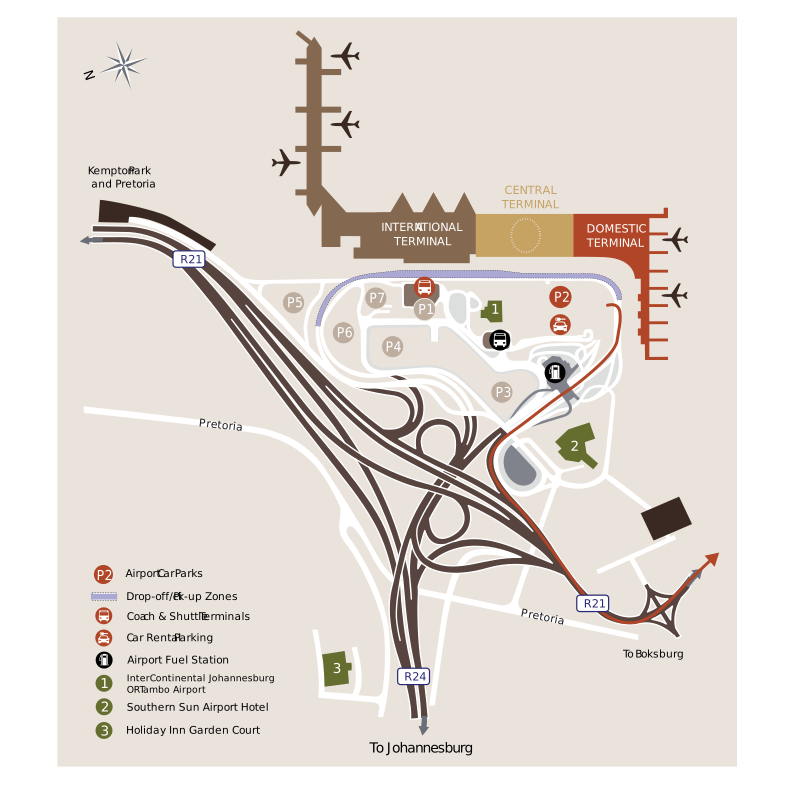
When you are ready to leave OR Tambo for your accommodation, by Hotel Shuttle, Uber, Bolt or Rental Car onward domestic flight, proceed to one of the areas on te map below
marked in this colour.
Car Rental Offices
Please use only the Uber or Bolt driver assigned in your app.
Important:
If you have difficulty finding the pick-up area, please ask an airport information desk or airport staff for directions to the Ride-Hailing Pick-Up Zone.
If you are travelling to Skukuza or KMI by air, head over to the Domestic Terminal
(Terminal B).
When you are ready to leave Cape Town International Airport for your accommodation, by Hotel Shuttle, Uber, Bolt or Rental Car onward domestic flight, proceed to one of theareas on te map below
marked in this colour.
If you are catching a connecting flight to another airport in South Africa, head over to the Domestic Departure hall.
Distance: 425 km, 264 miles
Driving Time: 5.5 to 6.5 hours (excluding stops)
Tolls: 3 toll plazas along the route (credit cards accepted)
Recommended Gate: Paul Kruger Gate
1. Leaving OR Tambo Airport : Exit the airport terminals and follow signs for the R21 South toward Brakpan / Boksburg. After roughly 3 km, take the exit onto the N12 East toward Witbank (Emalahleni).
2. Joining the N4 (Middelburg Highway): Merge onto the N12 East, which takes you through the Highveld. Near Witbank (Emalahleni), the N12 merges into the N4 Highway. Continue straight on the N4 East toward Middelburg and Mbombela (Nelspruit).
3. Transitioning to Lowveld (Near Mbombela / Nelspruit): Continue past Middelburg, Belfast (eMakhazeni), and down the picturesque Schoemanskloof Pass (N4) or main N4 via Machadodorp. Both meet back up before Mbombela. As you approach Mbombela (Nelspruit), take the bypass toward R40 / White River (Nsikazi).
4. The Final Stretch to Kruger National Park: Turn left onto the R40 North toward White River (Witrivier). Continue through White River on the R40 toward Hazyview. In Hazyview, turn right onto the R536 East (signed for Paul Kruger Gate / Kruger National Park). Drive straight on the R536 for approximately 44 km until you reach Paul Kruger Gate.
5. Inside the Park: Once through the gate, follow the paved main road (H11) for about 12 km straight into Skukuza Rest Camp.
1. Timing Is Crucial: You should leave the OR Tambo area no later than 11:00 AM to allow time for vehicle rental, rest stops, and gate entry and slower drive within Kruger Park.
2. Recommended Rest Stops:
Alzu Touros / Petroport (N4 near Middelburg): A popular stop with clean restrooms, food options, and a view of wild animals (rhinos, ostriches, buffalo) right behind the facility fence!
Hazyview: Ideal for last-minute snacks, fuel, or ATM cash before entering the park.
3. Tolls: Keep a physical South African bank card or Visa/Mastercard handy for the N4 toll gates. International contactless/tap payments usually work, but swiping is seamless.
If you are renting a car and driving from OR Tambo International Airport (Johannesburg) to Skukuza along the N12 / N4 highway, you will pass through 3 mainline toll plazas:
Toll Cost Summary (Standard Car / Class 1 Vehicle)
One-way: ~R260 – R270
Return trip: ~R520 – R540
Payment Methods
Credit/Debit Cards: All major Visa and Mastercard cards (including contactless tap-and-go) are accepted at all toll lanes.
E-Tags: Many South African rental cars come equipped with an automatic SANRAL E-tag. If your rental car has one, you can use the dedicated E-Tag / Fast Lanes. The toll fees will simply be added to your rental car bill.
Cash: South African Rand (ZAR) cash is accepted, but card payments are much faster and preferred.
Given responses by delegates, we have decided to provide ad hoc shuttle services free of charge using our LOC vehicles on Sunday 9 August. This will be between Skukuza Airport and the Skukuza Rest Camp only – any other arrival points should be serviced by their own shuttles. To assist in our planning, we ask that you please capture your itinerary information here, if you have not done so already.
Additionally, please be patient as we shuttle groups of passengers to Skukuza Lodge or the bungalows.
Flights from Johannesburg arrive at 11:05 and 14:05 and from Cape Town at 12:55 daily.
Since the LOC is returning to Potchefstroom on Saturday 15 August, delegates will need to book their own return shuttle (which may be shared to save costs) at the SANPARKS registration desk or at the Skukuza Lodge concierge.
Flights depart from Skukuza to Johannesburg at 13:35 and 14:35 and to Cape Town at 11:45.
Duration: Invited talks (25+5 mins); Solicited talks (15 + 5 mins); Contributed talks (12 + 3 mins).
SSID: Conference Guest
Password: knp@2026
Internet access will be available within the conference facilities.
A dedicated Wi-Fi network will be provided for conference use in the main meeting venues to support presentations and general academic activities (but probably not suitable for large data uploads or downloads).
Wi-Fi availability outside the conference venues may vary, and mobile data is recommended as a supplementary option for personal use. The Wifi networks and passwords will be available upon arrival at Skukuza.
Mobile data for personal use:
For personal communication and practical use such as WhatsApp, email, light internet browsing, and navigation to and within the park, delegates may find mobile data to be a convenient supplementary option during their stay.
Vodacom and MTN provide 3G/4G coverage in the Skukuza area, with generally good signal strength within the rest camp.
International delegates may purchase a local SIM card at OR Tambo International Airport upon arrival, or use an international eSIM service (such as Airalo, Nomad, or Holafly). Mobile data should be considered a supplementary option for personal communication and not a replacement for the dedicated internet provided within conference venues.
Offline maps are recommended when travelling within the park.
Breakfast / Dinner
The Welcoming Function is supported by the Department of Science, Technology, and Innovation (DSTI). This will include a light dinner with vegetarian options and drinks.
It takes place on Sunday, August 9, 2026 at 18:00 at the Conference Centre.
We will have sundowners (cocktails) on Wednesday, August 12, 2026 at 16:30 and then drive to a boma in the Park where the Bush Braai will take place. Vegetarian options will be available.
Game Drives
Game drives may be booked at the SANPARKS Reception or via the Skukuza Lodge Concierge.
These are separate from and additional to the Daily Conservation Fees. There are three daily drives (around 05:30 / 16:30 / 20:00 SAST; final times will be confirmed in the Park). The duration is around 3 hours, and for the night drive it is 2 hours.
Online reservations may also be done here: https://www.sanparks.org/parks/kruger/what-to-do/activities/game-drives